Touring

Two traveling exhibitions

2022–2026 · Eight cities

Hellenic Heads: Legacy and Renewal

Six over-life-size busts connect six periods of Greek history to six members of the artist’s family. The exhibition toured eight cities across Europe and the USA over five years, with English and local-language materials for each venue. Its eighth and final stop opened at the Embassy of Greece in Berlin on 9 September 2026.

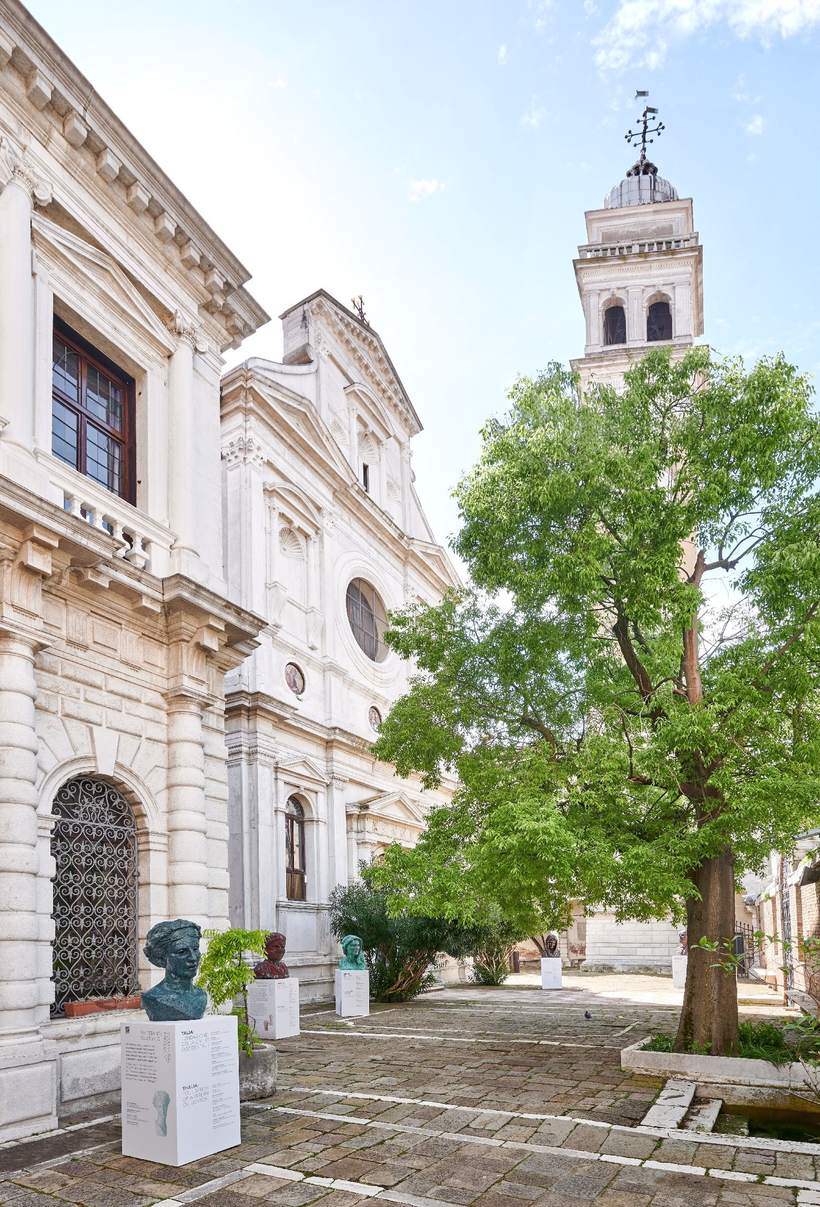
Seen by up to 100,000 visitors (studio estimate), it was presented in Venice in parallel with Biennale Arte 2024. Videos, informational panels, a catalog, and a dedicated website accompany the sculptures.

Explore Hellenic Heads ↗
Planned for the Gulf

Sulala: Lineage of the Future

Six larger-than-life sculptural portraits trace four generations of one family, from Smyrna (now İzmir) to Athens to New York, with documentary films and archival footage.

The exhibition is planned for Qatar, the United Arab Emirates and Saudi Arabia, in Arabic and English. Venues will be announced.

Explore Sulala ↗
Hellenic Heads at San Giorgio dei Greci, Venice, presented in parallel with Biennale Arte 2024.
The six busts of Hellenic Heads

Thalia · Classical Greece
Panayota Papaioannou, the artist’s mother. After the Vatican’s Thalia, Muse of Comedy.

Archon · Byzantine Empire
Captain Christos Petrides, the artist’s father. After the colossal Constantine in Rome’s Capitoline Museums.

Heroines · Greek War of Independence
Eleftheria Gkoufa, the artist’s wife. Honoring three women who took leadership roles in the Struggle; after Charles Cordier’s Saïd Abdullah.

The Refugee · Asia Minor Catastrophe
Maria Blizioti, the artist’s maternal grandmother, at nineteen on her arrival in Piraeus. After Michelangelo’s Rondanini Pietà.

Man of Two Wars · Occupation and Civil War
A self-portrait. After Rodin’s Pierre de Wissant from The Burghers of Calais.

Kore · Modern Greece
Sofia Petrides, the artist’s daughter, who posed at twelve. After Kore 684 in the Acropolis Museum, Athens.